How Reflection Coefficient Affects Signal Quality
2026-02-10
2208
Catalog
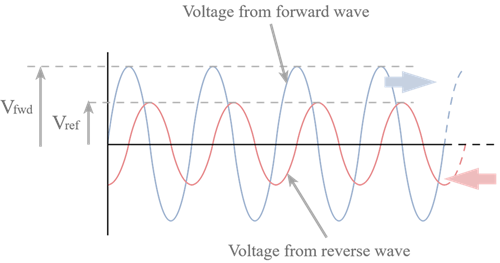
Figure 1. Forward and Reflected Signal Waves
What Is Reflection Coefficient?
The Reflection Coefficient describes how much of a signal is reflected back when it travels through a transmission line and reaches a point where the impedance changes, such as between a feeder and a load. Reflection Coefficient is commonly used to check how well a transmission line is matched to its load and is closely related to VSWR.
In antenna and RF systems, the reflection coefficient is defined as the ratio of the reflected signal to the incoming (incident) signal. Reflection Coefficient is usually represented by the Greek letter Γ (Gamma). A lower reflection coefficient means better impedance matching and less signal reflection.
How Reflection Coefficient Is Calculated
The reflection coefficient is calculated by comparing how much of a signal bounces back when it reaches a load, instead of continuing forward. This usually happens when the load impedance does not match the transmission line impedance.
A simple way to calculate it is by using this formula:
Where:
• Γ (Gamma) is the reflection coefficient
• Zₗ is the load impedance
• Z₀ is the characteristic impedance of the transmission line
If the load impedance is the same as the line impedance, the reflection coefficient is zero, meaning no signal is reflected. When the impedance difference increases, more of the signal is reflected, and the reflection coefficient becomes higher. This calculation helps show how well the transmission line and load are matched.
Relationship Between Reflection Coefficient and VSWR
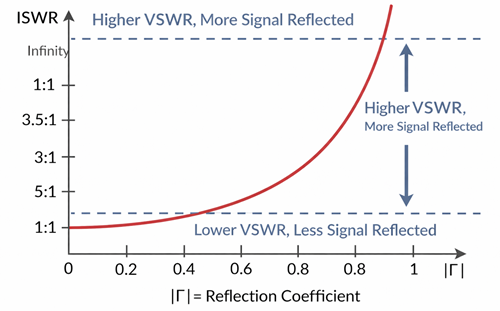
Figure 2. Relationship Between Reflection Coefficient and VSWR
The reflection coefficient and VSWR (Voltage Standing Wave Ratio) are closely related because both describe how well a transmission line is matched to its load.
The reflection coefficient shows how much of the signal is reflected, while VSWR shows how severe the mismatch is along the transmission line. When there is no reflection (perfect impedance matching), the reflection coefficient is 0 and the VSWR is 1:1.
Their relationship is given by this formula:
As the reflection coefficient increases, the VSWR also increases. This means more signal is being reflected and less power is delivered to the load. A lower reflection coefficient always results in a lower VSWR and better system performance.
Importance of Reflection Coefficient
The reflection coefficient is important since it shows how much of a signal is sent back instead of going to the load. When the reflection coefficient is low, most of the signal goes where it should, and the system works better.
If the reflection coefficient is high, more signal is reflected. This can cause signal loss, weak performance, and stress on the transmitter. By checking the reflection coefficient, you can see if the transmission line and load are matched properly.
Simply put, the reflection coefficient helps ensure better signal flow, higher efficiency, and safer operation in RF systems.
Reflection Coefficient vs Return Loss
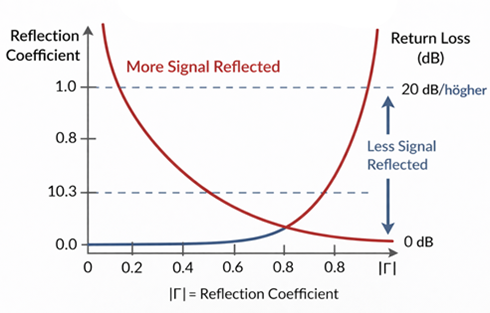
Figure 3. Reflection Coefficient vs Return Loss
The reflection coefficient and return loss are two closely related terms used to describe how much of a signal is reflected back in a transmission line due to impedance mismatch. They both talk about the same issue, but they express it in different ways.
The reflection coefficient shows the ratio of the reflected signal to the incoming signal. Its value ranges from 0 to 1, where a lower value means better impedance matching and less signal reflection. You can use it when analyzing impedance and signal behavior in RF systems.
Return loss expresses the same reflection information, but it is measured in decibels (dB). A higher return loss means less reflected signal and better system performance. Since it uses a logarithmic scale, return loss makes it easier to compare small differences in reflection.
Conclusion
The reflection coefficient is a major value for checking signal reflection and impedance matching in transmission lines and RF systems. By understanding how it is calculated and how it relates to VSWR and return loss, you can better evaluate signal quality and system performance. A low reflection coefficient means less signal loss, better efficiency, and safer operation of equipment. Learning this concept helps ensure reliable and efficient signal transmission applications.
 關於我們
每一次都讓客戶滿意。互信互利。
關於我們
每一次都讓客戶滿意。互信互利。
最高性價比的產品與最佳服務是我們永恆的承諾。
 了解 PCB 保險絲基礎知識、類型、用途和設計錯誤
2026-02-10
 AM 調製指數和調製深度指南
2026-02-10
常見問題 [FAQ]
1. What is a good reflection coefficient value?
A good reflection coefficient value is close to 0, which means very little signal is reflected back. This indicates proper impedance matching and efficient signal transfer.
2. What does a reflection coefficient of 1 mean?
A reflection coefficient of 1 means all the signal is reflected back toward the source. This happens when there is a complete impedance mismatch.
3. Can reflection coefficient be negative?
Yes, the reflection coefficient can be negative. A negative value shows that the reflected signal has a 180-degree phase shift compared to the incoming signal.
4. Is reflection coefficient the same as power reflection?
No. Reflection coefficient refers to signal voltage or amplitude, while power reflection refers to the amount of reflected power, which is the square of the coefficient.
5. How does frequency affect reflection coefficient?
Reflection coefficient often changes with frequency because the impedance of antennas and transmission lines varies across different frequency ranges.
6. What causes a high reflection coefficient?
Common causes include poor impedance matching, low-quality connectors, damaged cables, and incorrect antenna tuning.
熱門零件編號
 CL21B105KOFSFNE
 SMK316B7102KFHT
 GRM155R71H273KE14J
 08053D684MAT2A
 UMK107CH102JZ-T
 06035A102JA12A
 TPSD476M025R0125
 1062-12-0166
 ABM8-166-114.285MHZ-T2
 74279204
- MK64FX512VLQ12
- ATSAMD09D14A-MUT
- MT9172AP1
- CA3140EZ
- AT88SC0808CA-SH-T
- S29GL032N11FFIS42
- M2S010-TQG144
- LAN9500AI-ABZJ
- IS43DR16640B-3DBLI-TR
- CRM2512-FX-1501ELF
- 2DI100Z-120
- AD7862BRZ-10
- TDA7718TR
- LMC6035ITLX/NOPB
- TPS2041BQDBVRQ1
- LM3S1Z16-IQR50-C3
- SN75173N
- DRV8830DGQR
- AS4C256K16EO-50TC
- EPM7128BTC100-10N
- KFM1G16Q2D-HEB8
- LM3406M/NOPB
- LTC3716EG
- LTC3879IUD
- LTC4211CS8
- M41T56M6
- P89C51RA2BA/01
- S3F94C4EZZ-DK94
- SIP1280DV
- AMPAL20L10BJC
- GS816036BGT-150
- UC-81048
- ES8380SCC
- NJM2903RB1-TE1
- TC358775XBG
- VI-J30-CY/S
- SA915CM
- BACC10MK19
- IR3Y29A5